Hot Water Heater Replacement in Davidsonville, MD & Surrounding Areas
Hot Water Heater Replacement in Anne Arundel County & Prince George’s County, MD
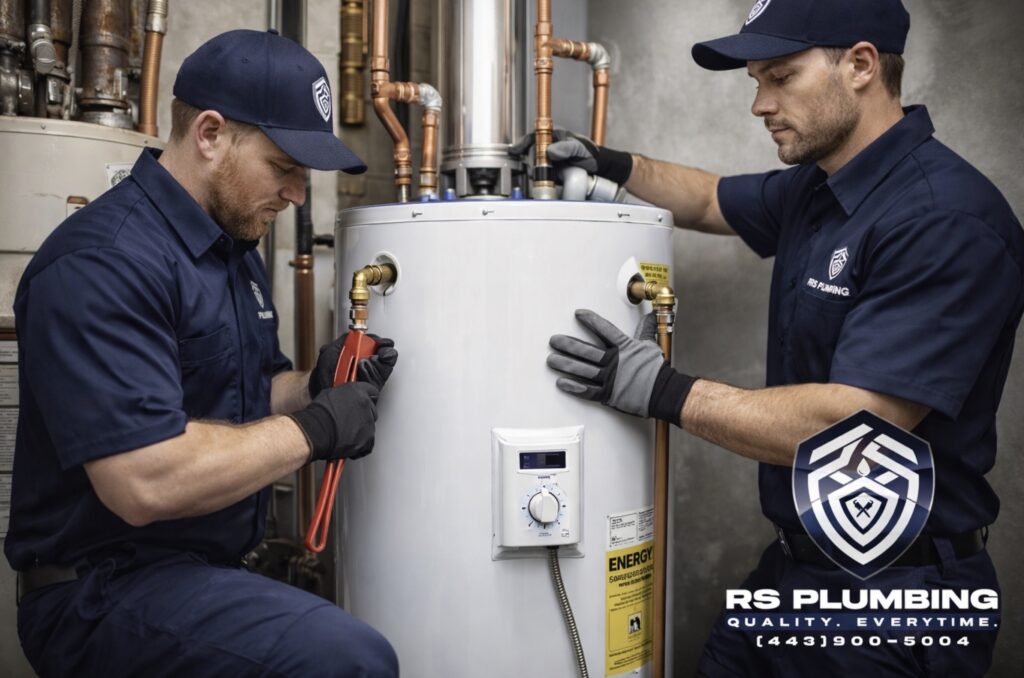
When your water heater fails, life at home or work comes to a halt fast. RS Plumbing LLC provides professional hot water heater replacement and water heater installation services throughout Anne Arundel County and Prince George’s County, Maryland. Whether you need a same-day water heater replacement or a planned upgrade to a more energy-efficient system, our licensed plumbers are ready to help.
Trusted Water Heater Replacement Services in Maryland
RS Plumbing LLC is a fully licensed and insured plumbing company serving homeowners and businesses across the region. From Annapolis and Glen Burnie to Bowie and Hyattsville, we handle tank water heater replacement, tankless water heater installation, gas water heater replacement, and electric water heater replacement. Every job is completed to Maryland plumbing code standards, giving you confidence that your system is safe, legal, and built to last.
We understand that a water heater breakdown rarely happens at a convenient time. That is why we offer emergency water heater service for situations that simply cannot wait. Our team responds quickly, diagnoses the problem accurately, and recommends the right solution for your home or commercial property.
Signs You Need to Replace Your Water Heater
How do you know if you need to replace your water heater? There are several warning signs that most homeowners in Maryland overlook until the damage is done. If your water heater is producing rusty or discolored water, making loud popping or rumbling noises, or failing to deliver consistent hot water, it is time to call a professional.
A leaking water heater is another serious red flag. If you notice pooling water around the base of the unit, do not wait. A failing tank can release gallons of water quickly, causing significant damage to flooring, walls, and personal property. Contact RS Plumbing LLC immediately if you suspect a leak.
How long does a water heater last? Most traditional tank water heaters have a lifespan of eight to twelve years. Tankless systems can last fifteen to twenty years with proper maintenance. If your unit is approaching or past that range, proactive water heater replacement is often smarter than repeated repairs.
Water Heater Repair vs. Replacement: What Makes Sense?
One of the most common questions homeowners ask is whether to repair or replace a failing water heater. The answer depends on the age of the unit, the cost of the repair, and the efficiency of your current system. As a general rule, if a repair costs more than fifty percent of a new unit and your water heater is more than eight years old, replacement is the more cost-effective choice.
RS Plumbing LLC walks every customer through an honest assessment before recommending any service. We never push unnecessary replacements. Our licensed plumbers evaluate your existing system, explain your options clearly, and give you a straightforward recommendation based on your specific situation and budget.
Tank vs. Tankless Water Heaters: Which Is Right for Your Maryland Home?
Choosing between a traditional tank water heater and a tankless water heater installation depends on your household size, hot water demand, and energy goals. Traditional tank systems are affordable upfront and widely compatible with existing plumbing. Tankless systems heat water on demand, which eliminates standby energy loss and can reduce energy costs significantly over time.
Maryland’s cold winters put extra strain on water heating systems, especially in older homes in Prince George’s County and properties near the Chesapeake Bay watershed in Anne Arundel County. Upgrading to an energy-efficient water heater is one of the most practical improvements a Maryland homeowner can make. RS Plumbing LLC helps you select the best water heater for your home based on fuel type, household demand, space, and budget.
We install and replace all major water heater types, including natural gas, propane, electric, and hybrid heat pump models. Every installation is performed to manufacturer specifications and Maryland state plumbing code requirements.
How Much Does Water Heater Replacement Cost in Maryland?
What is the average cost to replace a hot water heater in Maryland? Costs vary depending on the type of unit, the complexity of the installation, and whether any additional work such as permit filing or code upgrades is required. Standard tank water heater replacement typically ranges from several hundred to over a thousand dollars, while tankless water heater installation may run higher due to the equipment and venting requirements involved.
RS Plumbing LLC provides transparent, upfront pricing with no surprise fees. We offer free estimates and will always explain exactly what is included before any work begins. Investing in a quality replacement now protects you from emergency repair costs, water damage, and inflated energy bills down the road.
Why Anne Arundel County and Prince George’s County Homeowners Choose RS Plumbing LLC
RS Plumbing LLC has built a strong reputation across both counties by delivering honest, skilled, and reliable plumbing services. We are fully licensed to work in Maryland, carry comprehensive liability insurance, and back our water heater installations with a workmanship warranty. Our plumbers arrive on time, treat your home with respect, and leave the job site clean.
When you search for who installs water heaters near me, you want a company that knows your area, understands local code requirements, and has the experience to do the job right the first time. That is exactly what RS Plumbing LLC delivers to every customer in Anne Arundel County and Prince George’s County, MD.
We handle everything from permit acquisition to final inspection coordination, so you never have to navigate the process alone. Same-day water heater replacement is available for urgent situations, and we work with both residential homeowners and commercial property managers throughout the region.
Schedule Your Water Heater Replacement Today
Do not let a failing water heater disrupt your daily routine or put your property at risk. RS Plumbing LLC is ready to help you with professional hot water heater replacement, energy-efficient upgrades, and emergency water heater service across Anne Arundel County and Prince George’s County, Maryland.
Call us today or request a free estimate online. Our team is standing by to answer your questions, assess your current system, and get your hot water running reliably again. When it comes to licensed plumber services in Anne Arundel County and the surrounding region, RS Plumbing LLC is the name Maryland homeowners and businesses trust.

Hot Water Heater Replacement FAQs
Question: How much does hot water heater replacement cost?
Answer: The water heater replacement cost typically ranges from $800 to $2,500 or more, depending on the type of unit, the size, fuel source, and local labor rates. A standard tank water heater replacement for a gas or electric unit tends to fall on the lower end of that range, while upgrading to a tankless system or a high-efficiency model can increase the total investment. Factors like permits, code upgrades, and the complexity of the installation also affect the final price. Electric water heater replacement is often slightly less expensive than gas water heater replacement due to differences in venting and gas line requirements. The best way to get an accurate quote is to have a licensed plumber evaluate your current setup, water usage, and home size before recommending a unit. Many plumbing companies, including ours, offer transparent, upfront pricing with no hidden fees and financing options to help make the process more manageable for homeowners on a budget.
Question: How long does a water heater last before it needs to be replaced?
Answer: Most homeowners ask how long does a water heater last when they start noticing performance issues, and the answer depends on the type and quality of the unit. A traditional tank water heater typically lasts 8 to 12 years, while tankless water heaters can last 15 to 20 years or longer with proper maintenance. Brands like Bradford White, Rheem, and AO Smith are known for producing reliable, long-lasting units, but even the best equipment degrades over time due to sediment buildup, hard water, and normal wear on components like the anode rod and heating elements. If your water heater is approaching or past the 10-year mark and you’re experiencing issues, replacing it proactively is often smarter than waiting for a complete failure. A licensed plumber can inspect your unit and let you know whether repair or full hot water heater replacement makes the most sense given the age and condition of your system.
Question: What are the signs you need a new water heater?
Answer: There are several clear signs you need a new water heater that homeowners should watch for. The most obvious include no hot water in the house, inconsistent water temperatures, or water that takes an unusually long time to heat up. A leaking water heater — especially one leaking from the bottom — is a serious warning sign that internal corrosion or tank failure may be imminent. Rusty or discolored water coming from your hot water taps, a water heater making noise such as rumbling, popping, or banging, and a noticeable increase in your energy bills are all indicators that your unit is struggling. Visible rust on the tank exterior or around the connections is another red flag. If your unit is over 10 years old and displaying any of these symptoms, it’s worth having a licensed and insured plumber assess it. Catching these issues early can prevent costly water damage and ensure your household never goes without hot water unexpectedly.
Question: Why is my water heater leaking from the bottom?
Answer: A leaking water heater at the base is one of the more urgent plumbing issues a homeowner can face, and the cause matters greatly in determining whether repair or replacement is the right path. The most common causes include a faulty or aging temperature and pressure relief (T&P) valve, a loose drain valve, or — most seriously — internal tank corrosion. When the steel lining of the tank begins to corrode from the inside out, the tank walls weaken and water begins to seep through. This type of failure cannot be repaired and requires immediate hot water heater replacement to prevent flooding and structural damage to your home. In some cases, the leak may be traced to a connection or fitting that a licensed plumber can tighten or replace without requiring a full unit swap. However, a leaking tank itself is always grounds for replacement. If you notice pooling water around your water heater, turn off the cold water supply and contact a plumber right away — same day water heater replacement may be necessary.
Question: Should I repair or replace my water heater?
Answer: Deciding whether to repair or replace your water heater comes down to three key factors: the age of the unit, the cost of the repair, and how frequently issues have been occurring. A useful rule of thumb used by plumbing professionals is the “Rule of 5,000” — multiply the unit’s age by the estimated repair cost, and if the result exceeds 5,000, replacement is typically the smarter financial decision. For example, if your water heater is 10 years old and a repair costs $600, that equals 6,000, which suggests replacing it makes more sense. If your unit is under 6 years old and experiencing a first-time, isolated issue, a repair may be perfectly reasonable. However, if you’re dealing with a leaking water heater, recurring failures, or a loss of efficiency, investing in a new energy-efficient model will save you money on utility bills and provide far greater reliability. A licensed plumber for water heater service can give you an honest assessment to guide your decision.
Question: How long does water heater installation take?
Answer: For most homes, a standard tank water heater replacement takes between 2 and 4 hours from start to finish when performed by an experienced, licensed plumber. This includes draining and removing the old unit, preparing the connections, installing the new water heater, and testing everything to ensure proper operation. Gas water heater replacement may take slightly longer if gas line adjustments or new venting is required, while electric water heater replacement is often a more straightforward process. Switching from a traditional tank system to a tankless water heater involves more complex installation and can take 4 to 8 hours depending on the scope of work. If permits are required in your municipality, the overall timeline may be extended depending on inspection scheduling. Our team works efficiently to minimize disruption to your household and will always communicate realistic timelines upfront so you’re never left without hot water longer than necessary.
Question: Can I replace a water heater myself, or do I need a licensed plumber?
Answer: While it is technically possible for a homeowner to attempt replacing a hot water heater, it is strongly discouraged and potentially dangerous without the right knowledge, tools, and certifications. Gas water heater replacement involves working with gas lines, venting systems, and combustion safety — mistakes can lead to gas leaks, carbon monoxide exposure, or fire hazards. Electric water heater replacement requires proper electrical work that, if done incorrectly, poses serious shock and fire risks. Beyond safety, most municipalities require a permit for water heater installation, and unpermitted work can void your manufacturer warranty, create problems when selling your home, and result in costly fines. A licensed and insured plumber ensures the installation is code-compliant, completed safely, and backed by both a workmanship guarantee and the full manufacturer warranty. The peace of mind and long-term protection you get from professional installation far outweigh any potential savings from a DIY attempt.
Question: Do I need a permit for water heater replacement?
Answer: In most cities and counties across the United States, permit requirements for water heater replacement are mandatory. A permit ensures that the installation is inspected by a local building or plumbing official to verify it meets current safety codes — including proper venting, seismic strapping (in earthquake-prone areas), pressure relief valve installation, and correct clearances. Skipping a required permit can create serious liability if a problem arises, void your homeowner’s insurance coverage related to the water heater, and complicate the sale of your home. When you hire a licensed plumber for water heater installation, they typically handle the permit application process on your behalf, coordinate any required inspections, and ensure the entire job is fully compliant with local codes. Our team is familiar with local permitting requirements and takes full responsibility for making sure your replacement is done by the book from start to finish.
Question: What size water heater do I need for my house?
Answer: Choosing the right size is one of the most important decisions in the water heater replacement process, and getting it wrong means either running out of hot water regularly or overpaying to heat water you never use. For traditional tank water heaters, sizing is based on the First Hour Rating (FHR), which reflects how much hot water the unit can deliver in an hour of heavy use. As a general guideline, a 40-gallon tank is typically sufficient for 1 to 3 people, a 50-gallon unit works well for families of 3 to 5, and larger households may need 75 gallons or more. For tankless water heater installation, sizing is measured in gallons per minute (GPM) and depends on how many fixtures may run simultaneously. Factors like the number of bathrooms, dishwashers, washing machines, and your local groundwater temperature all influence the right choice. A licensed plumber can perform a proper load calculation to recommend the ideal unit for your specific household needs.
Question: What is the difference between a tankless and a traditional tank water heater?
Answer: The tankless vs traditional water heater debate is one of the most common questions homeowners face when planning a replacement. A traditional tank water heater stores a set volume of hot water — typically 40 to 75 gallons — and keeps it heated continuously, which means you pay to maintain that temperature even when you’re not using it. A tankless water heater, by contrast, heats water on demand as it flows through the unit, eliminating standby energy loss and providing an endless supply of hot water. Tankless systems are more energy-efficient and have a longer lifespan, but they come with a higher upfront cost and more involved installation. Tank water heaters are less expensive to purchase and install, making them a practical choice for budget-conscious homeowners or larger households with simultaneous high-demand usage. Brands like Rheem, Bradford White, and AO Smith offer excellent options in both categories. A licensed plumber can help you weigh the long-term savings against the installation investment to determine which system is the right fit for your home.
Question: What are the most energy-efficient water heater options available?
Answer: Homeowners interested in energy efficient water heater options have more choices today than ever before. Tankless water heaters are among the most efficient, using 24 to 34 percent less energy than conventional storage tank models for homes that use 41 gallons or less of hot water daily. Heat pump water heaters, also known as hybrid electric water heaters, are another highly efficient option — they move heat from the surrounding air into the water rather than generating heat directly, making them two to three times more energy-efficient than standard electric models. High-efficiency condensing gas water heaters are ideal for homes that prefer gas and use large volumes of hot water. Many energy-efficient models from manufacturers like AO Smith, Rheem, and Bradford White carry ENERGY STAR certification, which may qualify homeowners for federal or local rebates and tax credits. During your water heater installation consultation, our licensed plumbers are happy to walk you through energy-efficient options that align with your budget and long-term utility savings goals.
Question: What happens if I have no hot water in my house?
Answer: Waking up to no hot water in the house is a frustrating and disruptive experience, but understanding the possible causes can help you act quickly. If you have a gas water heater, the issue may be as simple as a pilot light that has gone out or a tripped gas valve — both of which can sometimes be reset without a service call. For an electric water heater, a tripped circuit breaker or a failed heating element is often the culprit. However, if the unit is older, heavily sediment-laden, or has been making noise recently, the loss of hot water may signal a more serious internal failure requiring hot water heater replacement. A faulty thermostat, a broken dip tube, or a failing gas control valve can also cause sudden loss of hot water. Rather than guessing, the safest and fastest path to resolution is to contact a licensed plumber who can diagnose the problem accurately. We offer emergency water heater replacement and same day service so your household can get back to normal as quickly as possible.
Question: Do you offer emergency water heater replacement services?
Answer: Yes, we offer emergency water heater replacement for homeowners who are dealing with a failed unit, a leaking water heater causing property damage, or a sudden total loss of hot water. Water heater emergencies don’t follow a 9-to-5 schedule, and neither do we. Our licensed and insured plumbers are available to respond quickly when you need help most, whether that’s in the middle of the week, on a weekend, or during a holiday. When you call us for emergency service, we arrive with fully stocked trucks carrying top-rated units from trusted brands like Bradford White, Rheem, and AO Smith so we can often complete your same day water heater replacement in a single visit. We’ll assess your existing setup, recommend the right replacement unit, handle any necessary permits, and complete a code-compliant installation as efficiently as possible. Don’t wait when a failing water heater is putting your home at risk — contact us immediately and we’ll get your hot water restored fast.
Question: Is there financing available for water heater replacement?
Answer: We understand that water heater replacement cost can be an unexpected expense, and we never want a homeowner to feel stuck with a failing system because of financial concerns. That’s why we offer flexible financing options that allow you to get a new, high-quality water heater installed today and pay over time with manageable monthly payments. Whether you’re replacing an aging tank unit, upgrading to a tankless system, or making an emergency switch after a sudden failure, our financing plans are designed to fit a wide range of budgets. Approved applicants can often take advantage of low-interest or deferred-interest terms, depending on the program. Our team will walk you through the available options during your consultation or service call with no pressure and complete transparency. Investing in a new energy-efficient water heater also typically results in lower monthly utility bills, which helps offset the cost of the unit over time. Contact us today to learn more about current financing offers.
Question: How do I choose the right plumber for water heater replacement?
Answer: Choosing the right licensed plumber for water heater installation is just as important as choosing the right unit. You want a plumber who is fully licensed and insured in your state, experienced specifically with water heater systems, and familiar with local permit requirements and building codes. Ask whether they carry top-tier brands like AO Smith, Rheem, or Bradford White, whether the installation includes a manufacturer warranty, and whether their workmanship is guaranteed. Be wary of extremely low quotes that may indicate cut corners, unlicensed labor, or substandard equipment. A reputable plumbing company will provide a clear, written estimate before work begins, explain your options honestly, and complete a code-compliant installation that you can count on for years. Reading verified reviews, checking licensing credentials, and confirming they offer emergency availability are all smart steps. Our local plumbing experts are proud to deliver transparent, professional service — from the first phone call through the final inspection — with your complete satisfaction as the priority.
